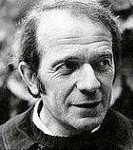
The Impossibility of the Gift

Notes on Given Time, Post #1

How should we read Jacques Derrida’s Given Time, a text that seems to defy standard approaches? Central to its understanding is to be aware of the need for a close reading of a text in which its subjects, the gift and time and their “impossibility,” are embedded in its structure. These subjects are given, made visible, by the introduction and development of symbolic themes through which they can be understood. These themes: the circle, the economic, the possible etc. are both written about and demonstrated within the text’s structure.

From the beginning of Given Time Derrida characterises the gift and time as impossible, both singly and together, asking: “What can time have to do with the gift? We mean: what would there be to see in that?” He follows on from this by saying there would be nothing to see, time is invisible; “it withdraws itself from visibility,” but goes on to say “nothing appears that does not require and take time. Nothing sees the light of day, no phenomenon, that is not on the measure of day, in other words, of the revolution that is the rhythm of a sun’s course.” Time is invisible and yet everything is subject to time, experienced in the “measure of day” governed by the circular movement of the Sun and the Earth.

The reference to “revolution” allows Derrida to introduce the first theme, that of the circle: “Whose figure precipitates both time and the gift towards the possibility of their impossibility” Thus the circle encompasses both the gift and time and their possible relationship to the impossible. The influence of the circle is not only written about it can also be felt in the text’s structure. For example, in paragraph four Derrida repeats, almost word for word, the opening sentence of paragraph two: “To join together, in a title, at once time and the gift may seem to be a laborious artifice, as if, for the sake of economy, one sought to treat two subjects at once.” Circularity is within the structure of the text, which is expanded by the introduction of the concept of economy. There then follows an extended definition of the word economy. Within this discussion the concepts of distribution and exchange are alluded to and linked to the circle, which Derrida says is at the centre of any problematic of oikonomia. A Greek word that means “management of the home,” from which the word economy is derived. It is in this sense that the economic is central to both the gift and time.

Derrida returns to the gift, casting doubt on its very existence, something he does throughout the chapter. He goes on to say if it does exist it would be related to economy. Yet the gift seems to have the capacity to disrupt the circle of economic exchange, by suspending economic calculation, one which “no longer gives rise to exchange.” Here a key point is made:“If there is gift, the given of the gift must not come back to the giving.” Therefore the gift: “must not circulate, it must not be exchanged, it must not be exhausted, as a gift, by the process of exchange, by the movement of circulation of the circle in the form of return to the point of departure.” (7)

The gift is related to the economic and yet cannot take part in the circularity of economic exchange, how can this be expressed? Derrida says the gift is aneconomic (not economic) – this doesn’t mean it has no relation to the economic but instead has a “relation of foreignness to the circle.” (ibid) A relationship which seems to be the impossible, a reference which brings us back to the beginning, but with an expanded understanding. Derrida says that the impossible: “gives itself to be thought as the impossible. It is proposed that we begin by this. And we will do so. We will begin later. By the impossible.” Here Derrida references time by projecting the idea of the impossible into the future discussion, before then expanding on the circle and its relationship to the gift and time.

There then follows a two-page discourse on the circle and on its relationship to the gift and time. Circularity can be viewed as a weakness, in logic a definition that relies on its terms for solution is a vicious circle and can never be resolved. Yet in the writings of Martin Heidegger the hermeneutic circle is celebrated as something we should inhabit and not flee from. Furthermore circularity is central to the “knot of language, (Heidegger’s geflecht) and to time. Derrida draws upon Heidegger to characterise the traditional philosophical conception of time as a sequence of “nows” that has a connection to the circular: “Aristotle follows tradition in connecting khronos [time] with sphaira [sphere/circle], Hegel stresses the ‘circular course’ of time” (8) This leads Derrida to say that wherever the concept of “time as circle is predominant, the gift is impossible.” “A gift is only possible only at the instant an effraction [breaking open] in the circle will have taken place.” (9)

Therefore the gift is outside of time, it’s breaking open of time’s circular structure “concerns time but does not belong to it.” This leads Derrida to say: “the “present” of the gift is no longer thinkable as a now, that is, as a present bound up in the temporal synthesis.”This allows Derrida to briefly expand on the concepts of the present, “in all the senses of this term:” the gift; what is before us; the time now. (9-10)

Derek Hampson
The Possibility of the Gift

Reading Given Time, Post #2

If the gift is the impossible, what can make the gift possible? To answer this question Derrida approaches the figure of the gift that appears when we describe an event of gift giving.

If we say: “Some “one” wants or desires to give” we hear this as incomplete, to complete it we need to say: “Some “one” intends to give or gives “something” to “someone other.” “A gives B to C.”
“For the gift to be possible, for there to be gift event, according to our common language and logic, it seems that this compound structure is indispensable.” “Some “one” has to give some “thing” to someone other, without which “giving” would be meaningless.” (11)

These definitions of the gift appear as tautological, the defined term (gift) is in the definition (give). Therefore the gift is not described in this definition. From this analysis Derrida concludes that these “conditions of possibility” (A gives B to C) give the impossibility of the gift, in terms of the “annulment, the annihilation, the destruction of the gift.” At this point he returns to an earlier definition: “For there to be a gift, there must be no reciprocity, return, exchange, countergift, or debt.” (12)

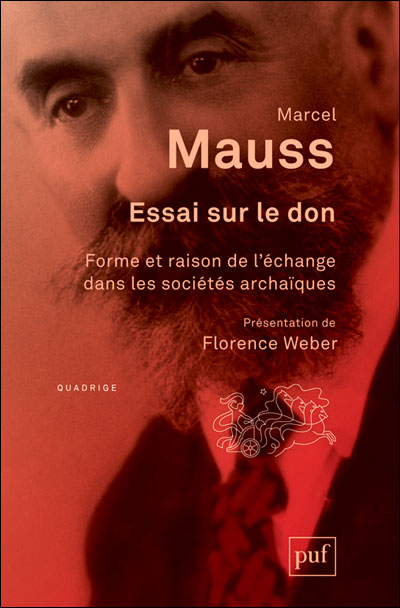
A reference to “anthropologies”of the gift brings in Marcel Mauss on the gift, before offering another understanding, one in which its actual existence is still in question: “There is gift, if there is any, only in what interrupts the system as well as the symbol, in a partition without return and without division” Derrida expands on this to say that for there to be a gift an economic exchange must not occur, i.e. one based on the circularity of exchange, repayment. Furthermore the donor and donee should not recognise the gift as a gift for it to be a gift. “It is thus necessary … that he not recognize the gift as gift… if the present is present to him as present, this simple recognition suffices to annul the gift.” Derrida then asks “Why?” His answer: “Because it gives back, in the place… of the thing itself, a symbolic equivalent.” “The symbolic opens and constitutes the order of exchange and of debt, the law or the order of circulation in which the gift gets annulled.” (13)

“The simple identification of the gift seems to destroy it.” The gift can appear as a gift, but its very appearance…annuls it as a gift. (14, para 2) “Transforming the apparition into a phantom and the operation into a simulacrum.” (14)

Derek Hampson

The Circularity of the Gift

Forgetting
Derrida restates the problem of the gift:
“For there to be gift, it is necessary that the gift not even appear, that it not be perceived or received as a gift.”
This leads Derrida to say that for there to be gift both the donor and donee must:
“Forget it right away [à l’instant]” (16)
“For there to be forgetting…there must be gift.” (17)
The relationship between the two is reciprocal:
“forgetting in the condition of the gift, and the gift is in the condition of forgetting” (18)

Derrida then detours towards Heidegger and his “question of being” a question which Heidegger says has been forgotten, which allows Derrida to link time to the gift and both to a “singular thinking of forgetting.” (19)

Derrida returns to forgetting on page 23, paragraph 2, this brings us to the next post’s theme: Marcel Mauss on the gift and two questions “that will orient our reading.” (25)

“How is one to legitimate the translations thanks to which Mauss circulates…what he understands by gift?” (ibid)
“What and whom is Mauss talking about in the end” (26)

Derrida now focusses on the impossibility of the gift:
“If the gift appears…as gift…it annuls itself.”
Acknowledging again “that the structure of this impossible gift is also that of Being.” (27)

He goes on to say that even if “the gift is another name of the impossible, we still think it, we name it, we desire it. We intend it. And this even if or because or to the extent that we never encounter it, we never know it, we never verify it, we never experience it in its present existence or in its phenomenon.” Derrida says, There is a gap between “gift and economy” as there is between: “thought, language, desire and knowledge, philosophy, science.” (29)

In philosophy this discourse of opposites is usually expressed in the dialectic, a process of reasoning expressed in terms of the thesis and antithesis, leading to a synthesis of the two. Derrida says we cannot simply reproduce this “critical machinery.” Neither can we reject it. This returns us to the start of Derrida’s text, when he asks that we enter into an “effort of thinking” the gift from within the seeming impossibility of the problem in which: “It is a matter…of responding faithfully but also as rigorously as possible both to the injunction or the order of the gift as well as to injunction or the order of meaning.” It is almost as if we need to live the implications of the gift structure and its opposing demands of “thought, language, desire and knowledge, philosophy, science.”

Towards the end of chapter one Derrida begins to offer an account of how these opposites, might be brought together. First asking about the gift and its relationship to the circle, invoked in the figure of the cycle of lectures, which form the basis of Given Time. The need to apply reason to the question of the gift, leading to a series of questions. First asking what drives him to: “speak and to render an account of the desire to render an account?” The giving of a lecture is defined in terms asking what drives this need to give (a lecture) rendering “an account of the gift.” His speaking is a verbal response to the call of the gift: “that forbids one to forgive whoever does not know how to give.” Such as the protagonist of Baudelaire’s Counterfeit Money, the up to now unspoken other subject of his analysis.

Derek Hampson

The Politics of the Gift

Reading Given Time, Post #4

Marcel Mauss’s Moral Conclusions
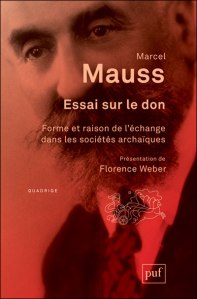
Marcel Mauss, in “The Gift,” proposes that the principle of the gift, because it is the foundation of the economies of archaic societies, must be both natural and universal and therefore it must underpin all our economic and social interactions.

Derrida’s analysis (pp. 63-66)
Derrida quotes at length from Mauss’s “Moral Conclusions,” in “The Gift,” in which Mauss calls for society to return to the customs of a gift economy; such as debt forgiveness, leading to: “more care for the individual, his life, his health, his education, his family and their future.” For Derrida these conclusions should not be read as an “epilogue external to the work,” they provide the theoretical organisation of Mauss’s discourse, a “good but moderate blend of reality and the ideal.” (64) In which both donor and donee are implicated in the gift: “one must be responsible for what one gives and what one receives.” (63)

Derrida characterises Mauss’s thinking on the gift as being driven by the “mediocrity of the mediating desire,” (64) i.e. compromise. The pure gift as an excess of generosity turns the good gift into the bad, Mauss searches for “the morality of the mediocratis,” the median, between the good and bad gift. In his “Moral Conclusions” Mauss says the gift directs the donor to give beyond the call of the gift, and yet, at the same time, be responsible for what is given. A society ordered on the gift economy must not make the donee reliant on others; he must become self-reliant “he must defend his interests, both personally and as a member of a group.” (64) Yet, for Derrida, this “happy medium” of donor circumspection and donee independence is as impossible as are the two extremes of the gift, the pure gift and the poisoned gift.

Derrida claims that Mauss’s call for a return to the principles of the gift economy is not a regression but a revolution, a “natural revolution,” as is the revolution of the Earth around the Sun. This return to “man’s nature,” which for Mauss is the eternal morality and the bedrock of the least advanced societies, is a return to a natural, and therefore universal society set in motion by the gift, leading to:

“The joy of public giving: the delight in generous expenditure on the arts; the pleasure in hospitality and in private and public festival.” (65)

Derrida glimpses the influence of Rousseau in this “non-Marxist socialism, a liberal anti-capitalism or anti-mercantilism…is the morality or the politics that organizes the structure, even the theoretical telos of this essay.” (66)

Derek Hampson

The Madness of the Gift

Reading Given Time, Post #5

Unreasoned absurdity
Derrida says that the aporia that Given Time deals with, i.e. the “impossibility” of the gift, which to be a gift must not be recognised as such, is by necessity ordered on madness. Because of this there is always the danger of any interpretation of the gift, including his own, becoming contaminated by the same disorder. This is something that Derrida discerns in Mauss’s account of the potlatch, the gift-giving ritual practised by certain tribal societies. Further signs of the madness of the gift are given by the “madly extravagant” potlatch itself, which can lead to unflinching destruction, one in which: “Whole boxes of olachen (candlefish) oil or whale oil are burnt, as are houses and thousands of blankets.” (46)

Derrida’s analysis (pp. 35-37)
On the face of it, the discourse on madness, which is the gift, appears as mad, it is unreasoned (alogos) and absurd (atopos). The rendering of a reasoned (logos) account of the gift is impossible as the gift cannot enter into the lawful, ordered balancing (nomos) required. Furthermore the gift, and by extension its discourse, has an atopic character, the gift to be a gift cannot have taken place (topos). (35) At this point Derrida associates another aspect of the gift, that of forgetting, an “affirmative condition of the gift,” with madness. Asking how can it be anything other than mad to desire to forget the giving of the gift, a giving which is the “origin of the good?” (36)

Returning to reason and order, the idea of madness can also be applied to the rational logos itself, which demands that the gift be annulled by equivalence (i.e. the giving back, the restitution, the exchange of the gift). This leads Derrida to ask: “Is madness the economic circulation annulling the gift in equivalence? Or is it the excess, the expenditure, or the destruction?” (37)

Derek Hampson

The Potlatch: a War of Property

potlach2
A display of goods to be given away at a potlatch at Yalis (Alert Bay, British Columbia), ca. 1900.

Reading Given Time, Post #6

The Potlatch
A gift-giving feast practiced by indigenous peoples of the Pacific Northwest Coast of Canada and the United States, among whom it is traditionally the primary economic system. (Wikipedia)

Marcel Mauss’s description of the potlatch:
“madly extravagant …Everything is based upon the principles of antagonism and of rivalry. The political status of individuals in the brotherhoods and clans… are gained in a “war of property,” just as they are in a real war…Yet everything is conceived of as if it were a “struggle of wealth.”…In a certain number of cases, it is not even a question of giving and returning, but of destroying, so as not to want to even to appear to desire repayment. Whole boxes of olachen (candlefish) oil or whale oil are burnt, as are houses and thousands of blankets. The most valuable copper objects are broken and thrown into the water, in order to crush and to “flatten” one’s rival. In this way one not only promotes oneself, but also one’s family, up the social scale.” (The Gift, 37)

Derek Hampson

The Delay of the Gift

Reading Given Time, Post #7

From Reception to Restitution
In his 1925 essay The Gift, Marcel Mauss seeks to explain the exchange economies of archaic societies in terms of gifts given and gifts returned. Mauss approaches this through a study of the potlatch, a property-giving ritual practised by indigenous people of the Pacific Northwest coast of Canada and the USA. He uses his account to challenge contemporary views of the potlatch’s underlying structure, which was thought as an economic cycle, of debts entered into and debts repaid, at a legally binding “due date.” Instead Mauss describes the potlatch as having a gift structure, one of “presents made” and “presents repaid,” characterising it as a process of “exchanging gifts.”

Rather than a contract between donor and donee, with an inherent due-date, the gift/countergift as theorised by Mauss is a force immanent to the thing: “a mysterious force, the thing itself demands gift and restitution.” Time is central to this, the gift cannot be reciprocated immediately, a length of time, a term, a delay must elapse before its return.

Derrida’s analysis (pp. 36-40)
Derrida points out the incongruity of Mauss’s description, gifts cannot be exchanged “tit for tat,” as this leads to their annulment. Yet the gift as given and its restitution by its return, the phenomenon of the exchanged gift, is undeniable. The gift and its exchange are joined, they are in synthesis. For Derrida this paradox constitutes the “madness of the gift,” one which informs his thinking on the subject.

He says that the syn of synthesis, which means “together,” has “an essential relation to time,” in terms of a “certain deferral/differing in time.” (38) In Derrida’s eyes the delay of the gift, its term, as a word and as the length of time of delayed return, creates a differance.* This acts as a “guardrail”** against the madness of the gift, which to be a gift must remain foreign to the circle of exchange, yet is pulled into it through its restitution, the antithesis of the gift.

Thus the temporalised thing, that which is in a neutral and homogenised time, is transformed as a gift, “temporized” – made subject to the time of delay. Derrida says this force of delay is inscribed in/upon the given-exchanged thing, in terms of “limit and time.” The thing of the gift has its essence in this demand of the “gift-counter-gift.” For Mauss the delay, the term between the reception of the gift and its restitution, forms the “original essential feature of the gift.” (39) Thus the time of delay appears as intrinsic to the gift.

*A key term for Derrida, plays on the French différer, which means both “to defer” and “to differ.”

**”Guardrail” is the translation of garde-fou, which, when translated literally, means “crazy guard.”

Marcel Duchamp: The Delay in Glass

Derek Hampson

Next Post: Structuralism

Previous Post: The Potlatch

Jacques Derrida, Structuralist?

Gilles Deleuze

Reading Given, Post #8

Is Jacques Derrida a structuralist, and is Given Time a work of structuralism? An indication of how these questions might be answered is given by Gilles Deleuze in his essay “How do we Recognise Structuralism.” (1972)

Structuralism emerges from the study of language, i.e. linguistics, as Deleuze says, “language is the only thing that can properly be said to have structure.” Following its emergence, structuralism extends into the work of diverse writers and domains: Levi-Strauss and anthropology, Lacan and psychoanalysis, Foucault and epistemology, Althusser and Marxism, etc.

Deleuze relates that we, others, and things are structured according to language. When we speak, it is our unconscious speaking; bodies speak through their symptoms, the outer show of their inner impulses; things speak through the silent discourse of signs, their discernible qualities.

Deleuze’s essay seeks to discern “formal criteria of recognition,” fundamental properties of structuralism applicable in many domains, by which the cited authors recognise the language proper to their domain, and, by which, we recognise them as structuralists. He does this by setting out seven criteria by which structures can be recognised.

  • First Criterion: The Symbolic
  • Second Criterion: Local or Positional
  • Third Criterion: The Differential and the Singular
  • Fourth Criterion: The Differentiator, Differenciation
  • Fifth Criterion: Serial
  • Sixth Criterion: The Empty Square
  • Seventh Criterion: From Subject to Practice

Derek Hampson

Hau: the Aura of the Gift

Reading Given Time, Post #9

In his 1925 essay The Gift, Marcel Mauss addresses the nature of the gifts exchanged in rituals such as the potlatch. Asking “what force is there in the given thing that causes its recipient to pay it back?” (GT, 41) Mauss names this “force” hau, a Maori word which might be translated as “aura.”

Hau signals the hidden power of the gift to demand restitution, it is that which carries out the synthesis, essential to the gift, between two antithetical operations, giving/taking or giving/returning.

Derek Hampson

Hau: a structuralist critique

Reading Given Time, Post #10

Claude Lévi-Strauss, in his Introduction to the Work of Marcel Mauss (1950), critiques Mauss’s notion of hau. This is the mysterious force in the gift, given in the property-exchange rituals of archaic societies, which demands its return at a later date. Hau is necessary for the gift, as it produces the synthesis between these two antithetical operations of giving and returning.

Instead of focusing on the thing that is given in the gift and its call for return, Lévi-Strauss, in line with the principles of linguistic structuralism, directs us outwards, towards the language in which these practices of gift-giving are expressed. In those societies studied, the antithesis between giving/returning does not exist, as these “antithetical operations are expressed by the same word.”

He goes on to quote from Marcel Mauss who notes, in The Gift, that “Papuan and Melanesian have one single term to designate buying and selling, lending and borrowing. “Operations that are opposites are expressed by the same word.” (GT, 75) Therefore, Lévi-Strauss claims, there is no need for hau, the “aura” of the gift, which he calls a “magical” notion.

Derek Hampson

Derrida’s critique of Lévi-Strauss

Reading Given Time, Post #11

Lévi-Strauss’s Linguisticism
Jacques Derrida in Given Time (pp.76-79) claims that Lévi-Strauss’s critique of hau, in which he locates gift-giving rituals such as the potlatch within a structuralist logic of exchange and relation, effectively annuls the gift; gifts cannot be exchanged “tit for tat.” Derrida goes on to say that the question of the given-thing is not a false problem, as Lévi-Strauss would have it. One which will “dissolve in the transparent light of an Aufklärung (clearing up) of relational logic.” (76)

Derrida characterises Lévi-Strauss’s analysis as belonging “to the rationality of the principle of reason.” One which appeals to linguistic concepts such as “zero phoneme” and “floating signifiers,” in order to resolve the contradictions inherent in notions such as hau; i.e. the antithetical operations of giving and taking within one expression. In Lévi-Strauss’s reasoning hau is an empty symbol, which is there as “the conscious expression of a semantic function,” to which we bring supplementary symbolic content to complete it. Lévi-Strauss’s argument follows the reasoning of symbolic logic, a logic which “summarises the general laws of language.”

For Derrida this analysis has the effect of substituting exchange for gift in the constitution of the symbolic, in events such as the potlatch. Leading Derrida to the conclusion “there is no gift as concerns reason.” The gift allows reason and not the other way around.

Derrida then comments that Lévi-Strauss’s claim “that all social phenomena can be assimilated to language,” was important for the “hegemonic institution of French structuralism as a linguisticism in the 60s.”

Derek Hampson

 The Title of the Gift

Reading Given Time, Post #12

Following his critique of Lévi-Strauss’s analysis of Marcel Mauss’s The Gift, Jacques Derrida, in Given Time (pp. 78-81), goes on to detail a further structuralist response to Mauss’s account of gift and exchange rituals in archaic societies. That of Émile Benveniste, whose Gift and Exchange in Indo-European Vocabulary broadens Mauss’s claims of a functional relationship between the gift and exchange, to encompass Indo-European societies. Benveniste employs a structuralist approach, similar to Lévi-Strauss’s appeal to language’s “unconscious mental structure,” studying the vocabulary of ancient Indo-European societies in terms of their usages of the words that signify “to give” and “to take.”

Benveniste at first focuses on the root word which means “to give” (as in “donation”) across numerous archaic Indo-European languages. The certainty given by this constancy of meaning is interrupted by the discovery that the Hittite verb means not “to give” but “to take.” It is accepted that they are both the same verb, raising the possibility that the original meaning of might have been “to take” rather than “to give.” Which then leaves the question of how “to give” could have come from “to take.”

This, on the face of it, appears as an insoluble problem, an aporia, one that Benveniste proposes to resolve through an appeal to language, in terms of syntax (sentence construction) rather than semantics (sentence/word meaning). His answer to this problem is that means neither give nor take “but either one or the other depending on the construction.” Derrida gives the following analogy: ‘in English, “to take something from someone” means to take something that belongs to someone, whereas “to take something to someone” means to deliver, to give something to someone.’ (79) Thus means “to take hold,” one can take hold in order to give or to keep. This means that language has the capacity to choose which meaning of the word to accept at the expense of the other.

Derrida’s analysis
Derrida thinks that not all the problems are resolved by this “syntactic decidability,” as it can only function against a background of “semantic ambivalence.” One in which the meanings of “to give” and “to take” are never stable, they “proclaim themselves…as notions linked by their polarity and which were susceptible of the same expression.” (79) At its root both “to give” and “to take” are linked opposites, which can be employed to express the same meaning. Thus they have both equivalence and ambivalence.

This leads Derrida to say: “if giving is not simply the contrary or something other than taking, if the gift is not totally foreign to taking, if it is not even contrary to it, then we have to take on the gift.” (81)

“In other words, what we do not yet know is whether we should take its title for legal tender…all this comes down to, comes back to the title, to the question of the title as question of credit and to the title as question of counterfeit money.” (82)

Derek Hampson

The Fold of Language

Derrida, pre-University essay on Shakespeare, written in 1950.
Writing in red his tutor’s comments and 10 out of 20 mark. © Stanfond University

Reading Given Time, Post #13

The Relationship Between Language and the Gift (GT, 79-81)
Derrida says any definition of language is informed by a certain relationship to the gift being there in advance, it is a relationship that obliges us to think the gift. We also speak of language as a given, one received out of a “fundamental passivity.” Language “gives one to think” but it also:

Steals, spirits away from us, whispers to us, and withdraws the responsibility it seems to inaugurate, it carries off the property of our own thoughts even before we have appropriated them (80)

The scope of this double capacity of language extends beyond the spoken idiom, “to all textuality in general.”

All semantic ambivalence and the syntactico-semantic problem of giving-taking are not situated only within the words of language or the elements of a textual system. Language is also an example of it, as is any textual determination. In a riposte to structuralism Derrida goes on to say:

One must not … ask oneself, in something close to rapturous wonder, how is it possible that to give and/or to take are said this way or that way in a language, … one must remember first of all that language is … a phenomenon of gift-countergift, of giving-taking—and of exchange. All the difficulties of nomination or writing in the broad sense are also difficulties of self-naming, of self-writing. (81)

Everything said about giving-taking folds back on language and writing as giving-taking. Giving comes back, comes down to taking and taking to giving, folding over not only language or writing but the text generally “beyond its linguistic or logocentric closure, beyond its narrow or common meaning.” This “come back” redoubles endlessly not only the semantic ambivalence that Beneveniste speaks of, but also the “ambivalence of the gift as good and bad, as gift and poison (Gift-gift).” (ibid)

Derek Hampson

Reading Counterfeit Money: 1. Introduction

Reading Given Time, Post #14

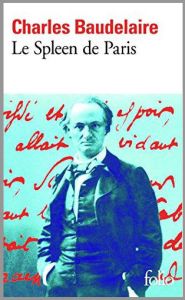
Jacques Derrida’s Given Time: 1. Counterfeit Money is structured over four chapters. Chapters one and two consider the gift. Chapters three and four are organised around interpreting Baudelaire’s short tale Counterfeit Money. Derrida describes the 84 pages leading up to this analysis, as “a long introduction, with many detours.” (85) Even then he still takes his time, he starts by skimming the borders, the “framing features” of the story. Considering first its title, and then the dedication of the book, Paris Spleen, of which Counterfeit Money is but an “excised morsel.” (87)

Counterfeit Money, overview
The story is a first person account, in which the narrator and his friend encounter a beggar, to whom the friend gives a two-franc coin, before confessing, to the narrator, that the coin was counterfeit. Surmising that his aim was to “pick up the certificate of a charitable man” on the cheap, the narrator refuses to forgive his friend. While it is never excusable to be mean, “the most irreparable of vices is to do evil out of stupidity.”

Derek Hampson

Reading Counterfeit Money: 2. The Title

Jacques Derrida’s library © Andrew Bush, 2001

Reading Given Time, Post #15

The title says: “since I say so many things at once, since I appear to title this even as I title that at the same time, since I feign reference and since, insofar as it is fictive, my reference is not an authentic, legitimate reference, well then I, as title…am counterfeit money.” (86-87)

Derrida’s analysis of the title of Baudelaire’s Counterfeit Money (pp. 84-87)
Derrida considers the short story’s title in terms of money, true and counterfeit. The title Counterfeit Money is that which guarantees that which it titles, the narrative, is entitled to be taken as what it gives itself to be, a story of counterfeit money.

Within this terminology there is always uncertainty, expressed as endless bifurcations. Derrida first makes the point that the title of Counterfeit Money does not belong to its narrative discourse. The fictive narrator of Counterfeit Money is not the author of its title, that author is Baudelaire. who is taken as real, yet the title is not foreign to the fiction. Chosen by the author, it is as fictive as the tale told in Counterfeit Money.

The title Counterfeit Money can be understood naively as a story about counterfeit money. Yet at the moment of this reading, the title is divided. It has two referents: counterfeit money itself and the text as a story about counterfeit money. Both of these referents title or titrate the title, they guarantee it. This first division of the title, “engenders many other dehiscences, virtually to infinity.” (85) The division of the title is a “dehiscence” a splitting apart. If we look at the two referents, namely, the story of counterfeit money and counterfeit money itself, we can see this division at work.

The narrative is immediately two things, it is a fiction and a fiction of fiction. It is a fiction written by Baudelaire, but it is a fiction that puts the narrative not in Baudelaire’s hand, as the writer, but in the mouth of a fictive narrator, who is not Baudelaire. This structure then folds back on itself, the fictive narrative is put forward as non-fictive by a fictive narrator, that is one who claims not to be fictive, in the fiction signed by Baudelaire.

This narrative recounts the story of a further twofold fiction, of counterfeit money, which is not a thing like any other, it is divided, it is both a sign and an incorrectly titled sign, a sign without value. The title Counterfeit Money again folds back, it is the title of the fictive text, which no longer only says: here is a story of counterfeit money, but the story as literature is itself counterfeit money. Everything that will be said, in the story, of counterfeit money can be said of the story, of the fictive text bearing this title. This text is also the coin, a piece of counterfeit money provoking an event and lending itself to this whole scene of deception, gift, forgiveness, or non-forgiveness. It is as if the title were the very text whose narrative would finally be but the gloss or a long note on the counterfeit money of the title, at the bottom of the page.

Counterfeit money is never, as such, counterfeit money. As soon as it is what it is, recognised as such, it ceases to act as and to be worth counterfeit money. (87) Derrida calls this an irreducible modality, which obligates you to “wonder what money is: true money, false money, the falsely true and the truly false and non-money which is neither true or false.” (87)

More on the border

Derek Hampson