Doxa and Pseudos

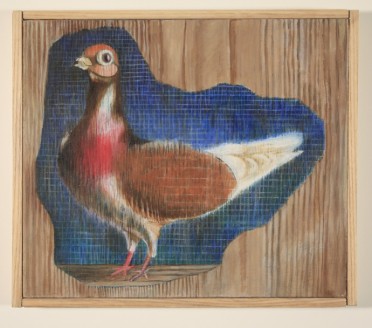
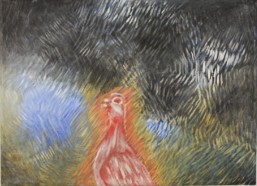
Post #23 of my commentary on Heidegger’s analysis of Plato’s Theaetetus, written in the lead up to my exhibition: The Aviary

The similes of the wax mass and the aviary connect our inner and outer perceptions (dianoia and aisthesis) to memory. The effect of this is to broaden the domain of beings beyond those which we have in immediate presence to include those which are bodily absent but which we retain. Furthermore the retained can also be both absent and present, i.e. it can be made present or we have the awareness of the possibility of making it present. It is this “essential twofold possibility, pertaining to every accessible being” (i.e. whether present or absent) that leads to the clarification of the essence of doxa.

Doxa
As we have seen Doxa is ambiguous, it means both the look that something or someone offers and what the viewer makes of it in terms of opinion. What shows itself gives off an appearance, awakens an impression in the viewer, which is intrinsically unreliable. Doxa therefore can be either true or false. Thus the word doxa obtains its meaning from two opposed directions, from the object and from the stance we take towards it. Both are present in one word, they are not juxtaposed but have one meaning, one which “involves attending to the other.”

Both similes taken together demonstrate that a being can be perceived both in immediate bodily presence and through the activity of memory making-present that which is absent. Making-present lets something not present be represented in advance, prior to it again coming into bodily presence. This is reflected in Plato’s definition of doxa as “a combination of what is encountered in immediate having-present with what is made-present in advance.” (221)

Heidegger tests this definition by applying it to an instance of doxic seeing, in this case a true view, i.e. one that is not mistaken: “Theodorus takes somebody approaching from a distance, who is in fact Theaetetus, to be Theaetetus.” (220) Heidegger analyses:

[the distant figure] “presents a view, a look, indeed the look of Theaetetus: accordingly, on the basis of this look, we take him for Theaetetus. Another possibility: we know Theaetetus, we know in advance that at this time of day he usually comes along this road, we can already visualise him doing this, we can hold ourselves to him as this being who is not yet bodily present. And now a man appears in the distance, presenting a view to us, without our being able to see with sufficient clarity that it is Theaetetus: but we opine it must be him: we now take the approaching person to be Theaetetus, not because of the look (having-present) but because of prior making-present.” (221)

Thus we have two objects towards which doxic seeing is directed, both of which are at the same time known and unknown. There is the unidentified “somebody approaching” who is concretely present but not known, we do not yet know who it is. We also have Theaetetus who we make present in advance of his concrete presence, so we know him in memory but do not know him in bodily presence.

These are not two separate ways of seeing but one. Heidegger reflects Plato’s definition when he says that the seeing of doxa, “is a comportment that is unitarily directed both to what is bodily present and to what making-present re-presents in advance.” (222) This leads him to characterise doxa as “two-pronged or forked,” one prong aimed at what is present before us, the other towards that which we anticipate – both seen together. This clarifies the nature of the true doxa as a fork, which means it must also be important for understanding the pseudes doxa and therefore of pseudos.

Pseudos
The understanding of pseudos is now approached through an example of a false view: “someone takes the distant Theaetetus for Socrates.” The distant person seems, looks like both Theaetetus and Socrates. For this to happen we must know both Theaetetus and Socrates and they must be bodily absent but yet made-present. This means the seeing of the false view can only happen in mnemonic making-present, i.e. what is brought to mind in memory. The action of looking, that Heidegger ascribes to the false view, is one of looking past what is seen, i.e. that which is; towards what is seen, that which is not. “What is passed by is precisely there, is as such present.”

The seeing of the pseudes doxa mis-takes the seeing of something as something, one thing determines the look of the other by hiding it. Yet it is not completely hidden it shows itself to our doxa as seeming. One thing can seem like… and like … Heidegger defines seeming as a mode of unhiddenness (i.e truth) which is essentially hiddenness (i.e. untruth). This brings us back to the beginning of Heidegger’s account of his engagement with Plato, truth as aletheia is what is not hidden, therefore untruth is what is hidden.

Derek Hampson

Next Post: Plato’s Failure          Previous post: The Simile of the Aviary

Contents
All Theaetetus Posts
The Simile of the Aviary

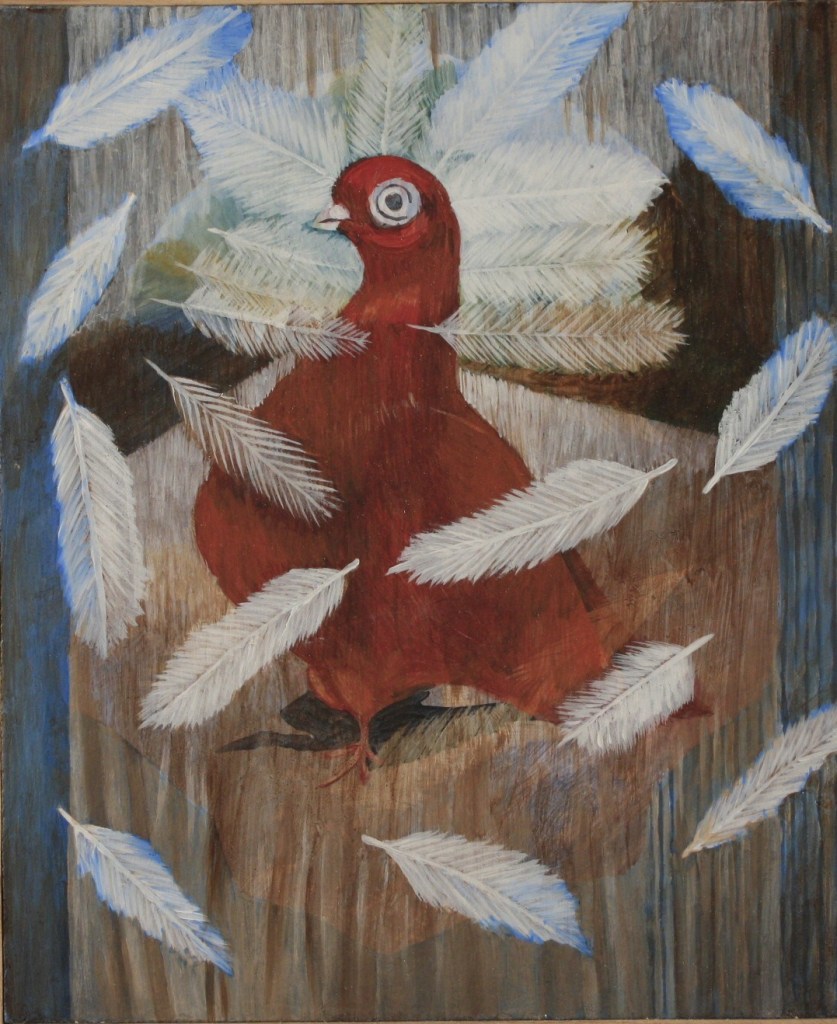
Post #22 of my commentary on Heidegger’s analysis of Plato’s Theaetetus, written in the lead up to my exhibition: The Aviary

The retaining of beings for making present in memory, as first encountered in the simile of the wax mass, is further elaborated through the simile of the aviary, as translated by Martin Heidegger in The Essence of Truth (215).

[Socrates] ‘Well, having and possessing seem different things. If a man buys a cloak and in this sense brings it under his power, but does not wear it, we should certainly say, not that he has it on, but that he possesses it’
[Theaetetus] ‘And rightly’
‘Now see whether it is possible in the same way for someone who possesses knowledge not to have it, in like manner, for instance, to a man who catches wild birds – pigeons or the like – and sets up an aviary at home in which to keep them. Might we assert that in a certain way he always has the birds, because he possesses them?’
‘Yes’
‘And yet in another way he does not have any of the birds, but has acquired power over them, since he has brought them under his control within his own enclosure. He can take them and hold them whenever he likes, by catching whichsoever bird he pleases, and letting it go again; and he can do this as often as he likes.’
‘That is true’
‘And again, just as a while ago we contrived some sort of waxen figment in the soul, so now let us make in each soul an aviary stocked with all sorts of birds, some in flocks apart from the rest, others in small groups, and some solitary, flying hither and thither among all the others’
‘Consider it done. What next?’
‘We must assume that when we were children this receptacle was empty, and we must understand that the birds represent the varieties of knowledge. And whatsoever kind of knowledge a person acquires and shuts up within the enclosure, we must say that he has learned or discovered the thing of which this is the knowledge, and that precisely this is knowing’
‘So be it’

The simile of the aviary

Heidegger’s Interpretation
When we are born this container in our soul is empty, gradually it becomes filled with birds, i.e. we become familiar with beings and store them in the aviary. We have the birds stored there as possessions, they are left to their own devices. Thus we retain them but they are absent, but we can make them present by the action of grasping, taking up an active relationship towards them. Thus in the sphere of making present, memory, the same thing can be absent and present, we can have it as possession (ktesis) without expressly bringing it to mind. We can also select it by grasping it, taking an active relationship of being towards it (hexis).

Whoever possesses such an aviary possesses the doves in this cage, in this container, but does so in different ways. First, by sitting in a house, in a room, and having the doves under a roof. In this way, he can possess them and add to his possession. But he can also grasp a dove inside the container. There is the fundamental possibility of taking something out of this domain and having it in a stronger sense, taking on a relationship of Being with it. (Being and Truth, 198)

Next post: Doxa and Pseudos              Previous post: The Simile of the Wax Mass

Contents
All Theaetetus Posts
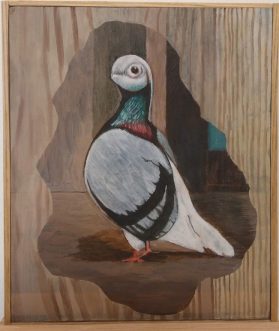
The Simile of the Wax Mass

Post #21 of my commentary on Heidegger’s anaylsis of Plato’s Theaetetus, written in the lead up to my exhibition: The Aviary

Assume then, by way of simile, that our souls contain something like a wax mass, sometimes larger, sometimes smaller, sometimes purer, sometimes more impure, sometimes harder, sometimes softer, and sometimes of just the right quality. [Everything that we immediately perceive, and also everything that we take in and comprehend, is imprinted upon it] … This wax mass, we say, is a gift of the mother of the Muses. (210)

The simile of the wax mass
Heidegger’s Interpretation

The soul contains a wax mass, into which all experiences are imprinted, its capacity to receive these impressions varies with the individual: “sometimes larger, sometimes smaller…” We can draw upon the impressions retained in this wax mass, in order to hold before ourselves that which is no longer present, or we are no longer with. We have a “connection of being” to what is absent, in the same way that an artist can “visualise and freely form their work in its entire fullness, prior to and without the help of any outline.” i.e. without a body being present. This capacity is the gift of the mother of the Muses, Mnemosyne, the goddess of memory, which belongs to the essence of the soul as a “primordial dowry.” (210)

Heidegger says this gift of Mnemosyne is not memory as recollection but as the faculty of mindfulness, the innate capacity of the soul to make-present that which is not physically there. In making-present that which is absent, we do not orient ourselves towards an inwardly stored image, but outwards towards the thing itself in its full appearance, which we betake ourselves to “without removing ourselves from our factual location.” (212) Since we do not have the thing itself before us from which to draw its eidos, its look, we orient ourselves to its eidolon, its look-alike [also simulacrum] retained in the wax mass inside the soul.

Thus our stance, through the soul, towards those beings retained for making-present, is that of mnemoneuein, the retaining of what is retainable, which Heidegger describes as a “faculty of the soul.” Yet what is retained is not unchanging, our relationship to it can change, we can forget, or the thing itself may change, so that our knowledge of it becomes distorted.

The making-present of the wax mass is essentially a passive having of what is retained. The simile of the aviary demonstrates a more active making-present of that which is retained.

Next post: The Simile of the Aviary          Previous post: What Lies Between

Contents
All Theaetetus Posts
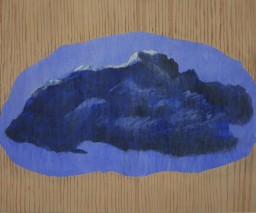
What Lies Between

Post #20 of my commentary on Heidegger’s anaylsis of Plato’s Theaetetus, written in the lead up to my exhibition: The Aviary

The failure of each of the three perspectives to explain the false view leads to their abandonment. In their stead the phenomenon of the pseudes doxa itself leads the way in what is now the main investigation, which seeks to clarify the nature of the “combined comportment” which the phenomenon of the false view demands.

The pseudes doxa is still approached in terms of knowledge, but rather than being thought as something we either know or do not know, what is looked for is what is in the middle of both, which Heidegger calls the “intermediate phenomena” of “coming-to-know.” This coming-to-know is explained through the process of learning; “in the learning process there is always something that one knows and as yet does not know.” (206) Thus, what lies in between knowing and not knowing, coming-to-know, combines the two. This allows a new perspective, the metasu, “what lies in between,” to be opened up, from which the phenomenon of the distorted view is now approached.

Through this new combined perspective, of coming-to-know, the complex duality of doxa is now better understood as requiring a comportment from ourselves “of knowing and at the same time not-knowing.” This in turn leads to the possibility of securing the essence of doxa, pseudes doxa and pseudos.

Rather than a philosophical impossibility, the false view is now understood as having an “intermediate character,” one which reflects the “condition and comportment of man wherein he is somehow related to beings, albeit distortedly.” (208) The phenomenon of the false view is thus intrinsic to our relationship to being, which was shown to belong to the soul. The soul is now revisited, in light of doxa’s combined duality, in a “new double characterisation,” given in the form of two similes.

These similes place us before two sensory images, the first a wax mass and the second an aviary, through which the soul’s capacity to make present what is not before us and its role in allowing us to see what is false are discussed. I shall describe each in turn.

Next post: The Wax Mass          Previous post: The Three Perspectives Retracted

Contents
All Theaetetus Posts
The Three Perspectives Retracted

Post #19 of my commentary on Heidegger’s anaylsis of Plato’s Theaetetus, written in the lead up to my exhibition: The Aviary

The third perspective from which doxa is examined gets closest to solving the phenomenon of false belief by acknowledging doxa’s duality. But the pseudes doxa is then explained in an erroneous manner by ascribing to it a process of substitution, “if one thing is posited instead of the other, at bottom this means that just one thing is posited.” (201) In the end all three perspectives do not suffice as they all lead to the assertion of the impossibility of the distorted view – yet it exists. This means new perspectives are needed, derived from the phenomenon of the distorted view itself.

The claims of all three perspectives are retracted by Socrates. On the face of it a simple move, yet Heidegger claims it means “the entire foundation of previous philosophy becomes unstable.” (204) This is because the principle of the first perspective, “either we have knowledge of something, or we have no knowledge of it,” which underpins the other two perspectives, is founded on the “fundamental truth of western philosophy,” “that what is, is, that the non-existent is not.”

For Heidegger this gives us “an intimation of the power the phenomenon of pseudos (untruth) possesses to disturb and amaze.” He also notes that the overturning of these guiding principles means that rather than conforming the analysis to these principles the analysis must now be conformed to the phenomenon of the pseudes doxa, i.e. what is seen when we have a false view.

Next post: What Lies Between          Previous post: Doxa as Substitution

Contents
All Theaetetus Posts

Doxa as Substitution

Post #18 of my commentary on Heidegger’s anaylsis of Plato’s Theaetetus, written in the lead up to my exhibition: The Aviary

In the final perspective from which pseudes doxa, the false view, is examined, the confusion of the first perspective is replaced by the proposal that what happens in the false view is a substitution. So the example of someone taking an approaching person to be Socrates, when he is actually Theaetetus, means that Theaetetus is replaced by Socrates. So being is affirmed for each, the interchangeables both exist. The double aspect of doxa, look and view, is maintained. Pseudos becomes what is missed, Socrates instead of Theaetetus. (198)

This appears to have the capacity to settle all previous counter arguments. But two objections are given. The first is that rather than the duality of substitution we see the singular being, one is taken for the other. The second objection to substitution is that if the one becomes the other, the one is the other. This leads to the absurdity of statements such as: “an ox is a horse or that two are one.” (200) Again proving the impossibility of the pseudes doxa.

Next post: The Three Perspectives Retracted          Previous post: Doxa’s View of Nothing

Contents
All Theaetetus Posts
Doxa’s View of Nothing

Post #17 of my commentary on Heidegger’s anaylsis of Plato’s Theaetetus, written in the lead up to my exhibition: The Aviary

In the next account, pseudos is looked at from the perspective of being and non-being, that something either is or is not. Pseudos means distortion; “something looks like…but behind which there is nothing,” what is seen in the pseudes doxa is thus non-existing, in seeing something in the distorted view we see nothing. (194) The claim is made that we cannot direct ourselves towards nothing, therefore the false view is once again found to be impossible.

Heidegger notes Socrates’ reasoning is a deliberately false path. What is seen in doxa is being, that which is there as the pregiven for what is physically present. The claim that we must always see the concrete thing directs the analysis away from the seeing of being towards seeing as the operation of our eyes, which are incapable of registering the non-existent, they simply take in information.

Next post: Doxa as Substitution           Previous post: The Confusion of Doxa

Contents
All Theaetetus Posts

The Confusion of Doxa

Post #16 of my commentary on Heidegger’s anaylsis of Plato’s Theaetetus, written in the lead up to my exhibition: The Aviary

The first perspective from which the pseudes doxa, the false view, is examined, is that of the guiding principle of knowledge, that we either know something or we do not know it. If you know something you do not not-know it and vice versa. In light of this the false view is at one and the same time a view and not a view. It is a view through which we think we know something, but at the same time we do not know it, because our view is false. An example of this state of affairs is given:

Someone who knows both Theaetetus and Socrates, sees a man, who is actually Theaetetus, coming towards him, but who he takes for Socrates. Thus he takes Theaetetus, whom he knows, as not he whom he knows, i.e. Theaetetus, but as someone else, i.e. as Socrates, but it is not Socrates.

The outcome of this is that someone who knows both Socrates and Theaetetus also simultaneously does not know them, in other words he confuses them. Therefore in the case of the false view, one knows, and does not know one and the same thing. (191) But the principle of knowledge that one either knows or does not know something makes this impossible – therefore the conclusion is reached that the pseudes doxa cannot exist.

Next post: Doxa’s View of Nothing         Previous post: The Falsity of Doxa

Contents
All Theaetetus Posts

The Falsity of Doxa

Post #15 of my commentary on Heidegger’s anaylsis of Plato’s Theaetetus, written in the lead up to my exhibition: The Aviary

The explication of doxa’s double character as both true and false, causes Theaetetus to adjust his second answer to Socrates’ question: “what is knowledge?”

“To say that knowledge is only view [doxa] is impossible, for a view can often be false. Only true view could be knowledge. Let that be my answer.” (184)

Here Theaetetus tries to steer the discussion away from the concept of false or distorted knowledge, towards knowledge as truth; because false knowledge, as given in the false view, appears to him be an impossible contradiction of terms. Yet experience tells us that it is an everyday occurrence. Heidegger gives an example, we see someone approaching and we think it is someone we know, but we are mistaken, it is not that person. Thus, in our initial sighting, we have a false view (pseudes doxa).

Socrates, rather than passing over the false view, expresses puzzlement; it appears to be part of everyday experience yet the guiding principle of knowledge, that we either know something or we do not know it, tells us the false view is impossible. This leads him to engage in an extended analysis of the pseudes doxa, in terms of this principle of knowledge looked at from three different perspectives.

Each of these perspectives demonstrate the impossibility of us having a false view, which will lead us in turn to decide which is true, the principles we apply to experience or the experience itself.

Next post: The Confusion of Doxa          Previous post: What is Doxa?

Contents
All Theaetetus Posts

What is Doxa?

Post #14 of my commentary on Heidegger’s anaylsis of Plato’s Theaetetus, written in the lead up to my exhibition: The Aviary

Doxa is usually translated as opinion, but this only goes half-way to capturing the meaning of the word for the Greeks. As such it does not allow us to understand why Theaetetus, after the refutation of his first answer, now appeals to doxa, in the same way he had first appealed to aisthesis, as that which immediately and unreflectively appears to constitute the essence of knowledge.

Heidegger points out that doxa has a double meaning, which reflects the previously seen dual determinations of knowledge as the “self-showing of the beings themselves” which we have in aisthesis (perception), and the soul’s relationship to being, which we have in dianoia (inner perception). Doxa is both the look, the idea that something offers, and the image or picture that one makes of what shows itself. A thing’s doxa is what it appears as, what it shows itself as; towards which we take-up a stance, we are of the view, we have an opinion, this is our doxa. Both aspects are present in one word.

To illustrate how we experience doxa, Heidegger, in Introduction to Metaphysics (YUP, 2000), calls on the idea of a city and the variety of views it offers us; which we take up and use in the construction of our views, our opinions of it:

A city offers a grand vista. The view that a being has in itself, and so can offer from itself, lets itself then be apprehended at this or that time, from this or that viewpoint. The vista that offers itself alters with each new viewpoint. Thus this view is also one that we take and make for ourselves. In experiencing and busying ourselves with beings, we constantly construct views for ourselves from their look…We construct an opinion for ourselves about it. (109)

This construction of an opinion by ourselves often happens without our looking closely at that which shows itself. “Thus it can happen that the view we adopt has no support in the thing itself.” (ibid) Therefore “with doxa we are immediately in a region that is indifferent in respect of truth and falsity.” (ET, 184) This means the duality of doxa, as appearance and opinion, is further doubled. Socrates says “doxa has two faces” by this he means that doxa as appearance can present what the being itself is, but can also make it out to be what it is not, likewise doxa as our view, our opinion of what is seen can be correct or incorrect. Thus both aspects of doxa, look and view, have the capacity to be pseudos, false, distorted.

This opens up the realm of untruth for the first time, the stated aim of Heidegger’s engagement with the Theatetus dialogue, and which only now, half way through the lecture course, makes an appearance.

Next post: The Falsity of Doxa           Previous post: The Second Answer

Contents
All Theaetetus Posts

The Second Answer

Post #13 of my commentary on Heidegger’s anaylsis of Plato’s Theaetetus, written in the lead up to my exhibition: The Aviary

The first part of my commentary on Martin Heidegger’s account of Plato’s Theaetetus, in The Essence of Truth, led from Socrates’ statement of the dialogue’s main question: “what is knowledge?” up to the rejection of Theaetetus’ first answer: knowledge is perception.

It was shown that perception, that which is given through the senses does not give us access to beings, and therefore cannot have a relation to knowledge, understood as the possession of truth, and therefore to being.

Rather than through the senses, knowledge is to be found in the soul’s striving relationship to beings, which gives us the possibility of their unhiddenness as being. The question then becomes about the character of this relationship, in which the possession of truth and therefore knowledge is made possible. It is immediately seen that this relationship has what Heidegger calls a double claim, it is in the relationship to beings, but it is also that which gives beings in their presence, such that they show themselves from themselves – i.e. as appearance.

The task then becomes the discovery of the phenomenon that involves this duality, the self-showing of beings as well as the soul’s relationship to being. This leads to Theatetus’ second answer to Socrates’ question, that “knowledge resides in the region of doxa,” the question now is what does doxa mean?

Next post: What is Doxa?           Previous post: The First Answer Refuted

Contents
All Theaetetus Posts

The First Answer Refuted

Post #12 of my commentary on Heidegger’s anaylsis of Plato’s Theaetetus, written in the lead up to my exhibition: The Aviary

It is at this point that the question of whether aisthesis, perception, is the essence of knowledge, as claimed by Theaetetus in his first answer to Socrates, is “decided in the negative.”

Aisthesis “refers to what is given in the senses,” hearing, seeing etc, which, as we have seen, does not give us access to beings, and by extension unhiddenness. Knowledge on the other hand is understood as the possession of truth i.e. the unhiddenness of beings, aletheia, which is achieved through the soul. This leads Socrates to conclude that it is possible to possess being and unhiddenness in this latter way, but not in the former way, therefore “perception and knowledge could never be the same.” (174)

Next Post: The Second Answer     Previous post: The Learning of Being

Contents
All Theaetetus Posts

“The Second Answer” posts 13 – 24 of my commentary on Heidegger’s analysis of Plato’s Theaetetus

The Learning of Being

Post #11 of my commentary on Heidegger’s anaylsis of Plato’s Theaetetus, written in the lead up to my exhibition: The Aviary

Towards the end of his enquiry into the nature of perception, Heidegger says a further understanding needs to be brought into focus, one which relates to us as the beings that perceive.

As we have seen perception is characterised as a duality, split between what strikes our senses, which is immediately and naturally given; and our understanding of what was previously called the excess, which is only achieved with effort over time. Similarly we are ourselves split, between our bodily relationship to that which we receive naturally, i.e. from nature, which conditions us; and our struggle to understand being over the course of the history of our being.

Heidegger characterises our being as Dasein, as “being-in-the-world,” this means we are not detached observers, but, from the moment of our birth, subject to the power of nature, experienced as “day and night, land and sea, generation, growth and decline, winter and summer, sky and earth.” We experience nature as something beyond our control, indeed as something which tunes us in our essence, i.e. in our striving for being. We experience this attunedness as “joy and cheerfulness, anxiety and misery.” Yet these moods do not control us, instead it is our Dasein as striving that seizes hold of our bodily being in its powerlessness in the face of nature, and directs it in its striving relationship with being, the ground of our essence. (170)

From this Heidegger says that our understanding of being as striving is not achieved through nature, but by the effort and patience of paideia (learning), a commitment of our authentic selves to striving itself, which is seldom achieved. “This is the reason we find it so difficult to grasp what this word (striving) refers to.” (171)

Next post: The First Answer Refuted          Previous post: The Excess reversed

Contents
All Theaetetus Posts

The Excess Reversed

Post #10 of my commentary on Heidegger’s anaylsis of Plato’s Theaetetus, written in the lead up to my exhibition: The Aviary

What has already been said about the soul’s capacity to perceive being – through the senses, and as the excess – is returned to, in the form of a contraposition, opposites opposed, spoken by Heidegger in terms of “on the one hand…on the other hand.” (164)

On the one hand in the immediate self-losing perception of what is hard, coloured, audible etc. through our bodily organs, the being of the hard and the coloured; hardness, colouredness are already understood, in a non-regarding and non-conceptual way. On the other hand what has come into view can be looked at, and illuminated in its structure, in terms of its being, what-being, being-opposed etc.

Rather than opposites these operations of the soul belong together. Being, what-being and also colouredness, hardness are always already perceived and in play when we perceive things as coloured, audible. Both the soul’s non-conceptual grasping of being through the senses (aisthesis) and its conceptual perceiving of the excess (dianoia) are held in its striving comportment towards these things, making them “have-able” as coloured and hard.

As a result of this the characterisation of being as the excess is rejected as inadequate, in favour of being as the pregiven, what must already be understood in order that something sensory can be perceived and then further illuminated, extended in its structure, i.e. as being-different, being-one etc. This explains Plato’s understanding of the soul as: “what holds up a region of sight within which everything sensorily perceivable is extended.” (166)

Next post: The Learning of Being          Previous post: The Excess Expanded

Contents
All Theaetetus Posts

The Excess Expanded

Post #9 of my commentary on Heidegger’s anaylsis of Plato’s Theaetetus, written in the lead up to my exhibition: The Aviary

In order to get a clearer view of what is striven for in this striving Socrates asks Theaetetus:

“[There is contained in authentic striving] being-similar and being-dissimilar, being the same and being-different?”
“Yes”
“And what about being-beautiful and being-ugly, being-good and being-bad?”
“It [the soul] also appears to view the being of these, especially in their relation to one another, reckoning within and for itself, upon the past and present in relation to the future.” (157)

Here the characteristics of being, that which the soul strives for, are expanded to include “being-beautiful and being-ugly, being-good and being bad.” These new being-characteristics bring things closer to us as what they are for us, they account for how things make us feel, whether they elevate or depress us. We are attuned in advance to the delight and non-delight of beings, which is “part of the region of perceivability that surrounds us.” (159)

It is in this region of perceivability that the relationship between the soul and what it strives for, being, is maintained in a form of seeing that is similarly striving. This is the scopic a “goal-directed seeing” that looks towards the object of seeing, the skopos with a preformed intention. What is looked at is not viewed in order to see it, but in order to authorise the stance, the comportment we take towards what is before us.

Whether we see them as good, bad or indifferent, this scopic seeing of the many understandings of being we have in the excess is always seen for something. Returning to the meadow that Heidegger placed us in earlier, in order to perceive the blue of the sky and song of the lark; these are experienced in their togetherness. The soul in its scopic seeing goes back and forth between these connections, from what is there to what it is for; in this case delight. “We delight in the natural blue-existing sky and in the singing-existing bird.” (136) In this sense the soul’s striving has a further character, that of the analogical, ana to go back and forth, and logos, to gather, to collect something in its connections.

In the background of this activity is temporality, the soul’s striving relationship to being is “intrinsically a relationship to time.” (162)

Next Post: The Excess Reversed       Previous post: Striving for the Excess

Contents
All Theaetetus Posts