The First Answer

Post #3 of my commentary on Heidegger’s anaylsis of Plato’s Theaetetus, written in the lead up to my exhibition: The Aviary

The first answer that Theaetetus offers, in response to Socrates’ question: “what is knowledge?,” is that knowledge is perception (aisthesis). Heidegger asks how is this answer arrived at? What is it in perception that appears to link it to knowledge, and by extension to truth?

For the Greeks, the becoming perceived of something, in perception, is the same as phantasia. This is what a thing appears as, what it shows itself as, its appearance. Heidegger makes the point that appearance should not be understood as illusion, what something seems like. Even so it will be seen that seeming returns at the end of Heidegger’s account of the Theaetetus as a feature of hiddenness i.e. untruth.

Returning to phantasia as appearance; that which we perceive in a perception is there in a state of being perceived, which we take for what it presents itself as. Heidegger gives an example: “the moon itself that appears in the sky, that presents itself and is present; this is something that shows itself.” The moon shows itself as being present, which we take for what it shows itself as, the moon. Therefore aisthesis has a double meaning relating to the perceived in its perceivedness, and our perception in which perceivedness occurs. Theaetetus’ thesis is that knowledge, as truth, is this perceivedness of what is seen. That which we perceive, in a perception, is there before us as something that shows itself as present, as “a kind of unhiddenness,” i.e. as being.

Theaetetus equates perception with truth, and therefore being, because what we have in a perception, i.e. the thing in its appearance, appears as “the most immediate mode of the unhiddenness of something…the most tangible truth.”

Yet it is open to question that what becomes manifest in this relationship, between what shows itself and perception, is the unhiddenness of beings as aletheia. For this to be the case our “perceptual comportments,” seeing, hearing etc, through which we have a perception, must “have a relationship to beings as such.” To test this claim the analysis next focuses on the essence of perception. Asking first whether or not a perceptual comportment “can bring itself into a relationship to beings as beings, such that the unhiddenness of beings is given in the perceivedness occurring in such a comportment.” (121)

Next post: The Role of the Body       Previous post: Socrates’ Question

Contents
All Theaetetus Posts

Socrates’ Question

Post #2 of my commentary on Heidegger’s anaylsis of Plato’s Theaetetus, written in the lead up to my exhibition: The Aviary

Plato’s Theaetetus is a dialogue, in which the leading question: “what is knowledge?” is posed by Socrates to Theaetetus. Knowledge, a translation of epistememe, has two meanings; it is a practical know-how, which “extends across all possible human activities,” from how to make a pair of shoes to how to conduct a war. It is also understood as seeing or idein. What unites both is their relationship to beings in their unhiddenness, their truth. Seeing is the seeing of beings in their presence, as what they show themselves for. Similarly know-how is disposal over beings in their presence, in their unhiddenness. This leads Heidegger to define knowledge as: “knowing-one’s-way-around in something as the possession of truth.” (120)

Next post: Theaetetus’ First Answer        Previous post: The Theaetetus – Introduction

Contents
All Theaetetus Posts

The Theaetetus

Part of The Aviary project

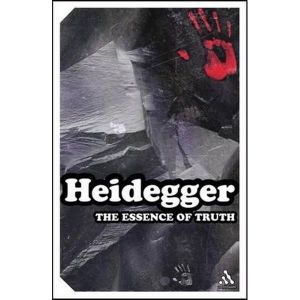
Martin Heidegger’s analysis of Platos’ Theaetetus can be found in The Essence of Truth (Continuum, 2002). As the title suggests, Heidegger’s intention, in this work, is to address the theme of truth, in particular the Greek understanding of truth as aletheia, which means the unhiddenness of being.

The Essence of Truth is part of Heidegger’s project to bring into the open what he believes we have long forgotten, that is being, that which is present in addition to what is physically there. Heidegger proposes that this return to being be re-enacted by examining the essence of truth as aletheia. In order to do this aletheia itself must be put into question, by exploring what beings are prior to unconcealment, i.e. as hidden, as untruth – pseudos, the false. Therefore the title of Heidegger ‘s analysis of the Theaetetus, in the second part of The Essence of Truth: “an interpretation of Plato’s Theaetetus with respect to the question of the essence of untruth.”

The Theaetetus is constructed in the form of a dialogue, between Socrates and Theaetetus, and discusses the nature of knowledge. Heidegger, whose analysis covers only the central section of this conversation, understands knowledge, in this context, as a form of truth. So Socrates’ opening question to Theaetetus; “what is knowledge?,” in effect asks about the meaning of truth, i.e. aletheia.

More on truth: The Lure of Truth

Art as Gift Overview

Starting 26th January 2017, the Art & Theory Reading Group met once a month for four months, at Wollaton Street Studios, to discuss Jacques Derrida’s Given Time: 1. Counterfeit Money, examining the implications for artistic practice of its ostensible theme of the gift.

Given Time is structured around Derrida’s deconstructivist analysis of the anthropologist Marcel Mauss’s 1925 essay The Gift, a study of gift-giving rituals in tribal societies, and Charles Baudelaire’s short story Counterfeit Money (1869).

In advance of each meeting I wrote a commentary on one of the book’s four chapters, in the form of a series of blog posts. The project culminated in a symposium, in which the artist and critic Peter Suchin (Art Monthly) discussed the question “What is Given in Marcel Duchamp’s Given?”

Derek Hampson
(Convenor, Art & Theory Reading Group)

Read my introduction to Jacques Derrida’s Given Time

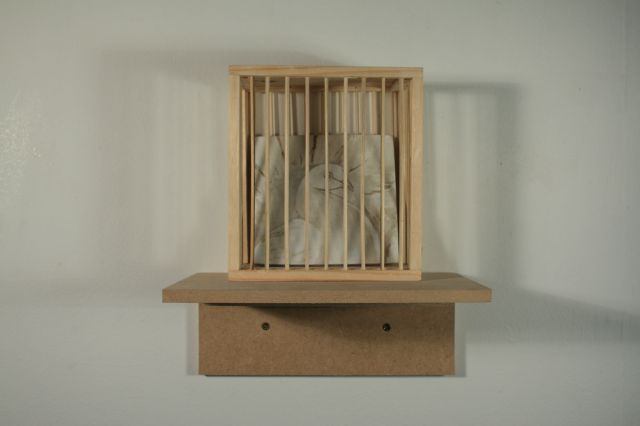
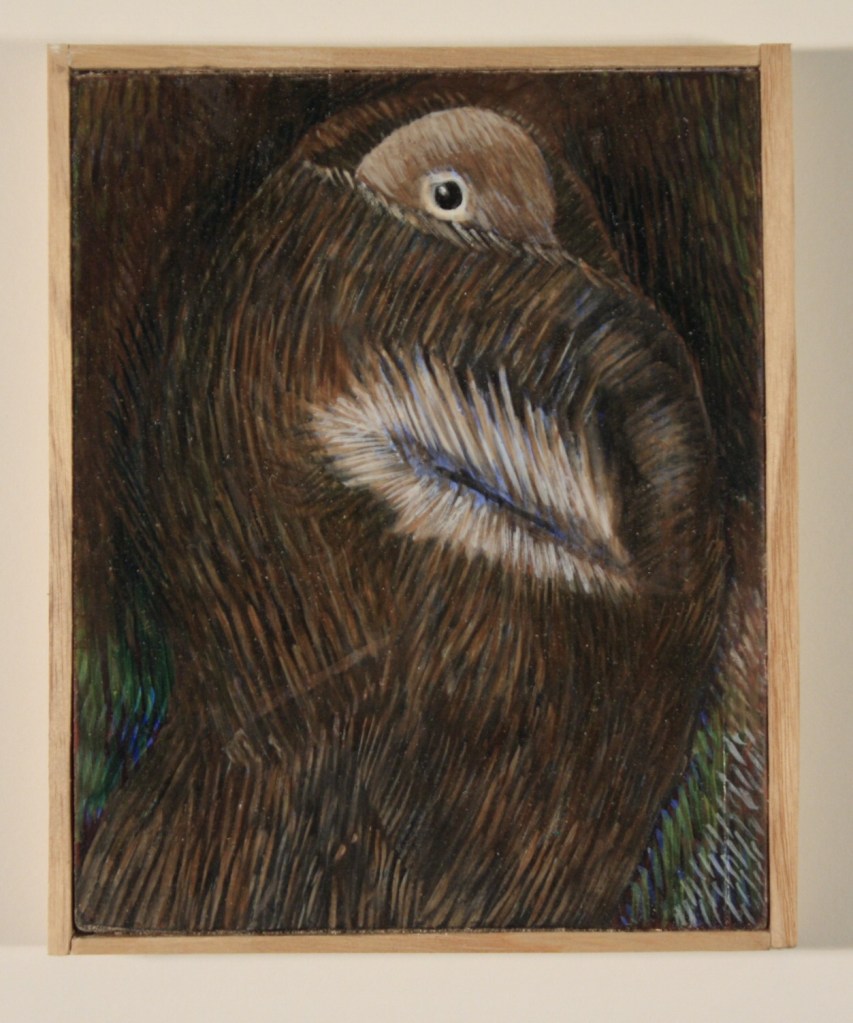
A bird in the head

Derek Hampson
White Fantail
2017,
Oil on board and wood construction,
30 x 23 x 9 cm.

A bird in the head

Danielle Arnaud
123 Kennington Road
London SE11 6SF

10 June – 8 July 2017
Private view: Friday 9 June 6 – 9pm

123 Kennington Road London SE11 6SF UK
T/F: +44(0)20 7735 8292
www.daniellearnaud.com

Opening times: Friday, Saturday and Sunday 2-6 pm and by appointment